Securing The Supply Chain: A Survey Of Contrasting Global Approaches To Critical Minerals Strategic Reserves
- admin_ftp@b2544fd367
- November 4, 2026
- news
- 0 Comments
What you need to know
- The US’s US$12 billion Project Vault is now operating. On 23 September 2026, two commodity traders each committed US$500 million to the reserve for the supply of critical minerals.
- Project Vault is a physical stockpile financed by industry and backed by US-EXIM. Manufacturers pay for access to stock, and traders source and hold it.
- Australia’s A$1.2 billion Critical Minerals Strategic Reserve is scheduled to be operational by the end of 2026. It is primarily a price-support model, using offtakes, forward contracts and price floors, with antimony, gallium and rare earths first.
- The EU, Japan, South Korea and Canada each use different models, ranging from joint purchasing and long-running stockpiles to equity-backed offtake rights.
What you need to do
- Prepare to deal with governments as commercial counterparties, as they increasingly act as buyers, financiers and offtakers.
- Review your offtake strategy so that reserve arrangements fit with your existing contracts and financing terms.
- Know where the risk sits: look closely at pricing, specifications, take-or-pay terms and termination rights.
- Explore funding options in Australia, the US, the EU and Canada.
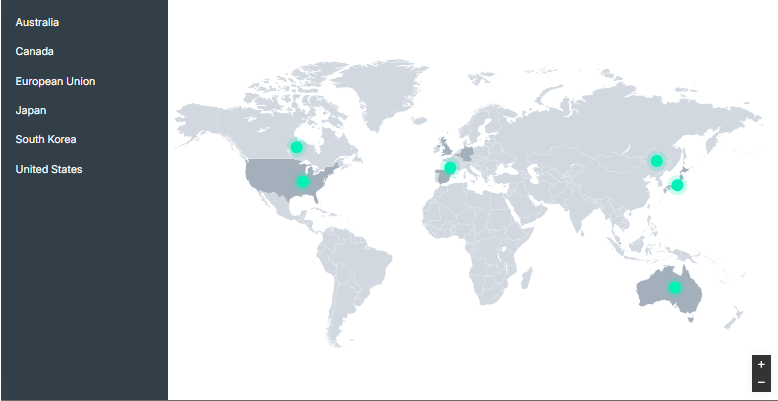
The United States has moved its US$12 billion strategic critical minerals reserve, known as Project Vault, into its operational and procurement phase, with two global commodity traders committing US$1 billion of critical minerals to VaultCo. Australia’s A$1.2 billion reserve is promised for the second half of 2026. As governments move from policy to implementation, we compare how six jurisdictions are building their critical minerals reserves, and what that means for producers, traders and offtakers.
Why now
Critical minerals underpin defense materiel, high-tech manufacturing and the energy transition. China’s 2025 export controls on gallium, germanium, antimony and rare earth processing technology have turned long-discussed supply chain risks into real commercial disruption. Governments are no longer just promoting these markets. They are now buying, financing and holding stock themselves.
On 23 September 2026, two major global commodity traders each committed US$500 million to VaultCo, the operating entity of Project Vault. Project Vault is a US$12 billion public-private partnership backed by the Export-Import Bank of the United States (US-EXIM). Other countries have announced or already run their own reserves, but the models differ widely. The US is building a physical stockpile financed by industry. Australia’s reserve is primarily a market-making and price-support mechanism. Other countries and regions – such as the EU, Japan, South Korea and Canada – have each taken a different approach again. The structure of each model will decide where the commercial risk falls, and which contracts market participants will be asked to sign.
Australia
Critical Minerals Strategic Reserve
The A$1.2 billion Critical Minerals Strategic Reserve (CMSR) is primarily a market-making and price-support mechanism, not a physical stockpile. It will secure rights to critical minerals produced in Australia and on-sell those rights to meet demand for Australia and its key international partners.1 Its toolkit includes fixed or floating price offtake agreements, trading in forward offtake contracts, demand and supply aggregation, physical stockpiling and contracts for difference (CfD) with price floors and ceilings. The 10% Critical Minerals Production Tax Incentive, which starts in July 2027, provides further support.2 The US-Australia Critical Minerals Framework gives a further platform for cooperation.3
Prime Minister Anthony Albanese announced the CMSR on 24 April 2025 to strengthen the security and resilience of critical minerals supply chains.4 The government allocated A$1.2 billion to the reserve in the 2025-26 federal budget, and said it would be operational from the second half of 2026. Responsibility for the taskforce has moved from the Department of the Prime Minister and Cabinet to the Department of Industry, Science and Resources, and Export Finance Australia now has an expanded range of financial tools to support implementation.
The reserve will first focus on antimony, gallium and rare earth elements. These are critical to clean energy, high-technology manufacturing and advanced military equipment. Rather than holding stock, the reserve will mainly secure rights to minerals produced in Australia and sell those rights on to buyers.5 A$1 billion for these transactions comes from the A$5 billion Critical Minerals Facility, which provides government-backed loans and equity. A$185 million is set aside for selective stockpiling and implementation.6 Australia’s plan has been described as a “market stabilising” model, in which the government acts as a guaranteed buyer to reduce investor risk.7
Key insights
Australian producers of antimony, gallium and rare earths are the first likely counterparties, and the CMSR can act as a guaranteed buyer to help projects reach financial close. Producers should expect offtake, forward and CfD terms, and should consider how price floors and ceilings interact with existing offtakes and finance covenants. Because the CMSR will on-sell rights to Australia’s international partners, overseas offtakers and traders will find themselves buying from the Commonwealth rather than the mine.
- Department of Industry, Science and Resources, “Critical Minerals Strategic Reserve”, Department of Industry, Science and Resources website.
- Australian Taxation Office, “Critical Minerals Production Tax Incentive”, last updated March 3, 2026, Australian Taxation Office website.
- Department of Industry, Science and Resources, “United States–Australia Framework for Securing of Supply in the Mining and Processing of Critical Minerals and Rare Earths”, October 21, 2025, Department of Industry, Science and Resources website.
- Department of the Prime Minister and Cabinet, “Critical Minerals Strategic Reserve”, Department of the Prime Minister and Cabinet website.
- Export Finance Australia, “Delivering Australia’s critical minerals supply”, January 12, 2026, Export Finance Australia website.
- Department of Industry, Science and Resources, “Strategic reserve to secure Australia’s critical mineral supply”, January 12, 2026, Department of Industry, Science and Resources website.
- Saloni Sachdeva Michael and Akanksha Golchha, “Building critical mineral stockpiles: A key priority for India”, June 28, 2025, Institute of Energy Economics and Financial Analysis (IEEFA) website.
Canada
Critical Minerals Accelerator
Rather than establishing a dedicated reserve agency, Canada is building its critical minerals stockpile through investment, domestic powers and international partnerships. Natural Resources Canada launched the Canada Critical Minerals Accelerator (CCMA), introduced in Budget 2025, on 7 July 2026.1 Delivered by Export Development Canada, the CCMA invests in projects across the value chain, from extraction to processing. One of its stated purposes is to help advance a national stockpile of critical minerals that will contribute to the supply needs of both Canada and its allies.2
The first agreement under the CCMA is between a Canadian resource company, the Canada Growth Fund and the CCMA. The Canada Growth Fund will establish the commercial framework for an equity-like investment of up to US$400 million into the resource company’s smelting operations to support expanding production capacity for germanium, gallium and antimony. The operation is a fully integrated polymetallic smelting and refining complex, with a long history of critical minerals production. The agreement also enables the Government of Canada to negotiate an offtake structure that could include rights to a portion of future germanium, antimony and gallium production.
At the Canada Investment Summit in September 2026, Prime Minister Carney said Canada had signed more than 50 critical minerals agreements with over 15 countries in the past year, unlocking C$20 billion of investment.3 In October 2025, the then Energy and Natural Resources Minister, Tim Hodgson, announced Canada would launch its own stockpiling effort and support those of trusted partners.4 Minister Hodgson announced 26 new investments, partnerships and measures to accelerate and unlock C$6.4 billion of critical minerals projects. Natural Resources Canada is exploring stockpiling options and negotiating offtake agreements with producers. The first two are with a global mining company for scandium and a Canadian graphite developer for graphite.
Key insights
Direct government investment can help fill gaps and crowd in other investment. It should lead to additional critical minerals stock on the market.
- Natural Resources Canada, “Canada announces first agreement under new Canada Critical Minerals Accelerator”, July 7, 2026, Government of Canada website.
- Government of Canada, “Government Response to the Third Report of the Standing Committee on Natural Resources titled: ‘An Extraordinary Opportunity for Canada’: The Development of Critical Minerals”, House of Commons of Canada report, 5.
- Jackson Chen, “Canada’s critical minerals push opens new frontiers in the North”, September 28, 2026, Mining.com.au website.
- Natural Resources Canada, “Canada unlocks 26 new investments and partnerships with 9 allied countries to secure critical minerals supply chains”, October 31, 2025, Government of Canada website.
European Union
RESourceEU
The EU relies on coordination under the Critical Raw Materials Act (CRMA) and RESourceEU.1 A new European Critical Raw Materials Centre will act as a coordination hub, supporting strategic stockpiling and joint purchasing alongside work with Member States on a coordinated EU stockpiling approach.
The EU’s approach is set out in the RESourceEU Action Plan, adopted on 3 December 2025, which builds on the CRMA.2 The Plan aims to accelerate implementation of the CRMA, reduce strategic dependencies, and strengthen economic security.3 Its immediate priorities are rare earth permanent magnets, battery raw materials, and defense-related raw materials. The initiative:
- provides financing and concrete tools to protect industry from geopolitical and price shocks;
- promotes critical raw materials projects by de-risking investments and removing regulatory bottlenecks; and
- partners with like-minded countries to diversify supply chains.4
A European Critical Raw Materials Centre is expected to be set up in 2026. It is intended to oversee investment, stockpiling and joint purchasing. Alongside it, a financing hub is to mobilize €3 billion. Working with the European Investment Bank, Member States and private investors, it should facilitate financing through grants, loans, guarantees and equity, including through the proposed European raw materials corporation.5
The EU Energy and Raw Materials Platform – Raw Materials Mechanism, established in March 2026, aims to connect offtakers and suppliers of strategic raw materials, financial institutions, and stockpiling service providers.6 It is designed to target the EU’s 17 strategic raw materials under the CRMA. On 9 October 2026, the Commission announced that it had selected 46 new Strategic Projects across 16 Member States.7 The projects cover 15 of the 17 strategic raw materials, including lithium, nickel, cobalt, manganese and graphite – all of which support the EU battery value chain.
The CRMA also sets 2030 benchmarks for EU capacity equivalent to at least 10% of annual consumption of strategic raw materials in extraction, 40% in processing and 25% in recycling.8 It also seeks to ensure that no more than 65% of the EU’s annual consumption of any strategic raw material at the relevant processing stage comes from a single third country.
RESourceEU sets an operational framework, but its impact will depend on the ability of the EU and national authorities to execute consistently over time.9
Key insights
With no single EU stockpile, opportunities will come through joint purchasing, the Raw Materials Mechanism and Strategic Project status, not one central buyer. Producers in Europe and in partner countries should consider whether their projects could qualify as Strategic Projects and get access to the €3 billion financing hub.
- Carole Maczkovics, Sam Jungyun Choi and Matthieu Coget, “RESourceEU Action Plan – Strengthening the EU’s Access to Critical Raw Materials”, December 16, 2025, Global Policy Watch (Covington & Burling LLP) website.
- European Commission, “Commission adopts RESourceEU to secure raw materials, reduce dependencies and boost competitiveness”, December 3, 2025, European Commission website.
- International Energy Agency, “RESourceEU Action Plan”, last updated May 31, 2026, International Energy Agency website.
- European Commission, “Commission adopts RESourceEU to secure raw materials, reduce dependencies and boost competitiveness”, December 3, 2025, European Commission website.
- Insight EU Monitoring, “EU Commission selects 46 new strategic critical raw materials projects”, October 9, 2026, Insight EU Monitoring website.
- European Commission, “EU Energy and Raw Materials Platform – Raw Materials”, European Commission website.
- Insight EU Monitoring, “EU Commission selects 46 new strategic critical raw materials projects”, October 9, 2026, Insight EU Monitoring website.
- Davide Fina, “Europe’s critical raw materials bet: a reality check on the EU’s ambitions”, June 17, 2026, ODI Global website.
- Carole Maczkovics, Sam Jungyun Choi and Matthieu Coget, “RESourceEU Action Plan – Strengthening the EU’s Access to Critical Raw Materials”, December 16, 2025, Global Policy Watch (Covington & Burling LLP) website.
Japan
Japan – JOGMEC
Japan runs a government-private sector stockpiling system established in 1983 and administered by Japan Oil, Gas and Metals National Corporation (JOGMEC).1 Stock is released when imports are interrupted or domestic supply runs short. A major pillar of the strategy is strengthening the stockpiling system for the 34 rare metals currently covered, as authorized under Article III.11(xiii) of the Act on JOGMEC.2 The general target is 60 days of supply, rising up to 180 days for minerals with high geopolitical risk. JOGMEC subsidizes the interest on funds borrowed to buy the metals and the cost of storing them. The specific ore types and quantities held are not disclosed, to avoid affecting the market.
Japan is also looking beyond its own borders. On 19 March 2026, US Trade Representative Ambassador Jamieson Greer announced the enactment of the US–Japan Action Plan.3 Under the Action Plan, the US and Japan are to develop strategic trade policies and border mechanisms to mitigate supply chain vulnerabilities and protect the downstream industries that depend on critical minerals imports. This cooperation includes Japanese investment of up to US$73 billion in US energy projects.4
Key insights
JOGMEC is an experienced buyer, but it does not disclose what it holds, so suppliers should expect little information about market-moving releases. Its 60 to 180-day targets mean steady demand for high-risk minerals. The US–Japan Action Plan points to trade measures that could favor suppliers from allied countries, which is relevant to how Australian and North American producers position themselves.
- Japan Organization for Metals and Energy Security (JOGMEC), “Stockpiling”, JOGMEC website.
- International Energy Agency, “International Resource Strategy – National stockpiling system”, last updated April 9, 2025, International Energy Agency website.
- Office of the United States Trade Representative, “Ambassador Jamieson Greer Announces U.S.-Japan Action Plan on Critical Minerals”, March 19, 2026, Office of the United States Trade Representative website.
- Reuters, “Japan, US announce energy projects, critical minerals action plan”, March 20, 2026, Reuters website.
South Korea
PPS and KOMIR
South Korea uses a dual-track stockpiling and management system between Korea Mine Rehabilitation and Mineral Resources Corporation (KOMIR) and the Public Procurement Service (PPS). The PPS manages non-ferrous metals and KOMIR, the state mineral resources corporation, manages rare metals.1 KOMIR was formed in September 2021 through a merger of the Mine Reclamation Corporation and the Korea Resources Corporation.2 As well as holding stock, it supports overseas resource development through loans, equity investment and guarantees covering up to 50% of project costs.
The government plans to increase stockpiles of rare metals from 54 to 100 days by 2031, and non-ferrous metals from 50 to 60 days by 2027.3 It also intends to halve normal release times to 30 days and make emergency deliveries within eight days.
On 22 September 2026, President Lee Jae Myung and Australian Prime Minister Anthony Albanese met at the UN General Assembly, reaffirming their commitment to deeper strategic cooperation in critical minerals and clean energy, defense and resilient supply chains. Prime Minister Anthony Albanese emphasized Korea as a trusted partner on critical minerals and clean energy, and the potential to combine Korea’s manufacturing capabilities with Australia’s abundant natural resources.4
Key insights
Increasing rare metals stocks from 54 to 100 days will increase demand, which is an opportunity for suppliers. KOMIR’s loans, equity and guarantees of up to 50% of project costs can support offtake-linked investment.
- International Energy Agency, “The National Program for Metal (Nonferrous and Rare) Stockpiling”, last updated April 9, 2025, International Energy Agency website.
- Abhishek Sharma, “The Policy Edge of Japan and South Korea in Securing Critical Minerals”, April 2026, Observer Research Foundation website.
- International Energy Agency, “The National Program for Metal (Nonferrous and Rare) Stockpiling”, last updated April 9, 2025, International Energy Agency website; Hyun Soo Cho and Jane Nakano, “The Minerals Security Partnership Under the South Korean Leadership”, January 28, 2025, Center for Strategic and International Studies (CSIS) website.
- Yonhap, “Leaders of Korea, Australia agree to boost cooperation for stable energy supply”, September 23, 2026, The Korea Times website.
United States
Project Vault
Project Vault takes the traditional physical stockpile and runs it as a public-private partnership that brings suppliers and demand-side manufacturers together.1 Manufacturers pay subscription or commitment fees in return for access to stock during a disruption. Unlike the US government-operated Strategic Petroleum Reserve, this relies on private firms rather than the public balance sheet to run the reserve.2
The US government announced Project Vault in February 2026. VaultCo is an independently governed private company that implements the reserve. US-EXIM approved up to US$10 billion in long-term financing, alongside nearly US$2 billion of private investment.3 In September 2026, two commodity traders each committed US$500 million to procure and deliver critical minerals, with support from US-EXIM financing.4 The older National Defense Stockpile mainly serves defense needs, whereas Project Vault is aimed at the wider US industrial base.
The reserve operates by participating companies specifying the materials and grades they need. Traders then buy, transport and manage the stock, which is held at facilities across the US.5 Aerospace OEMs, energy equipment manufacturers, battery manufacturers and data-storage manufacturers were among the companies initially identified as potential industrial users. Three commodity trading companies were named as the original suppliers of critical minerals, with a fourth global commodity trader now joining as well.
However, questions have been raised about whether the model can deliver what is promised. The Peterson Institute warns that voluntary participation would leave out both large self-insuring firms and small enterprises unaware of their exposure, hollowing out the risk pool in ways that could cause the program to fail when it is needed most.6 Columbia’s Center on Global Energy Policy adds that relying on commodity traders, who profit from the very volatility the reserve aims to stabilize, carries arbitrage risk without transparent sourcing rules and published governance criteria.7
Separate from Project Vault, in July 2025, the operator of the only US rare earths mine announced a multibillion-dollar deal with the US government to boost output of rare earth magnets.8 Under the deal, the US entered a 10-year agreement establishing a floor price commitment of US$110 per kilogram for the producer’s NdPr products.
Key insights
For traders, Project Vault is a new procurement channel, but it brings government-backed scrutiny of sourcing and pricing. Given criticism that traders may profit from the very volatility the reserve aims to stabilize, traders should expect future sourcing transparency and governance publishing requirements. Producers will likely supply through traders rather than direct sales to the reserve, so traders should check that offtakes permit on-sale into a government-backed stockpile. Manufacturers paying commitment fees should focus on what disruption, allocation and drawdown pricing mean in practice.
- Kevin Brunelli and Tom Moerenhout, “Project Vault: Big Ambitions for Critical Minerals Stockpiling Face Tensions in Execution”, June 1, 2026, Center on Global Energy Policy at Columbia website.
- Cullen S. Hendrix, “Strengthening Project Vault: The US plan to stockpile critical minerals”, May 2026, Peterson Institute of International Economics website.
- Gracelin Baskaran, “Project Vault Moves from Concept to Execution”, September 23, 2026, Center for Strategic and International Studies (CSIS) website.
- Cecilia Jamasine, “Glencore, Mercuria to help build US minerals stockpile with $1B EXIM financing”, September 23, 2026, MINING.COM website; Mercuria, “Mercuria Commits $500 million to VaultCo, U.S. Critical Mineral Stockpile, in Partnership with the U.S. Export-Import Bank”, September 23, 2026, Mercuria website.
- The Oregon Group, “US critical minerals reserve adds US$1 billion through Glencore and Mercuria”, September 28, 2026, Mercuria website.
- Cullen S. Hendrix, “Strengthening Project Vault: The US plan to stockpile critical minerals”, May 2026, Peterson Institute of International Economics, website.
- Kevin Brunelli and Tom Moerenhout, “Project Vault: Big Ambitions for Critical Minerals Stockpiling Face Tensions in Execution”, June 1, 2026, Center on Global Energy Policy at Columbia website.
- MP Materials, “MP Materials Announces Transformational Public-Private Partnership with the Department of Defense to Accelerate U.S. Rare Earth Magnet Independence”, July 10, 2025, MP Materials website.
[View source.]